

CM Punjab Ration Card Program 2026
The Government of Punjab, under the leadership of Maryam Nawaz, has launched the CM Punjab Ration Card Program 2026 as a major welfare initiative.
The aim of this program is to provide a monthly subsidy of Rs. 3,000 to low-income families, helping them manage essential food expenses amid rising inflation.
This initiative reflects the government’s commitment to supporting vulnerable communities by ensuring access to basic necessities like flour, sugar, and other household items.
What is the Punjab Ration Card Program?
The Punjab Ration Card Program is a financial assistance scheme that provides eligible families with a monthly subsidy through a ration card system.
How It Works
- Beneficiaries receive a ration card or digital access linked to their CNIC
- The card can be used at registered utility stores and partner shops
- Essential food items are available at subsidized rates
The program is also connected with national welfare initiatives like the Benazir Income Support Programme to expand its reach.
Key Features of the Program
Monthly Financial Support
Eligible families receive Rs. 3,000 every month.
Digital Ration Card System
A modern system linked directly with CNIC records.
Transparent Eligibility Verification
Ensures only deserving families benefit from the program.
Wide Accessibility
Usable at registered stores across Punjab.
Eligibility Criteria
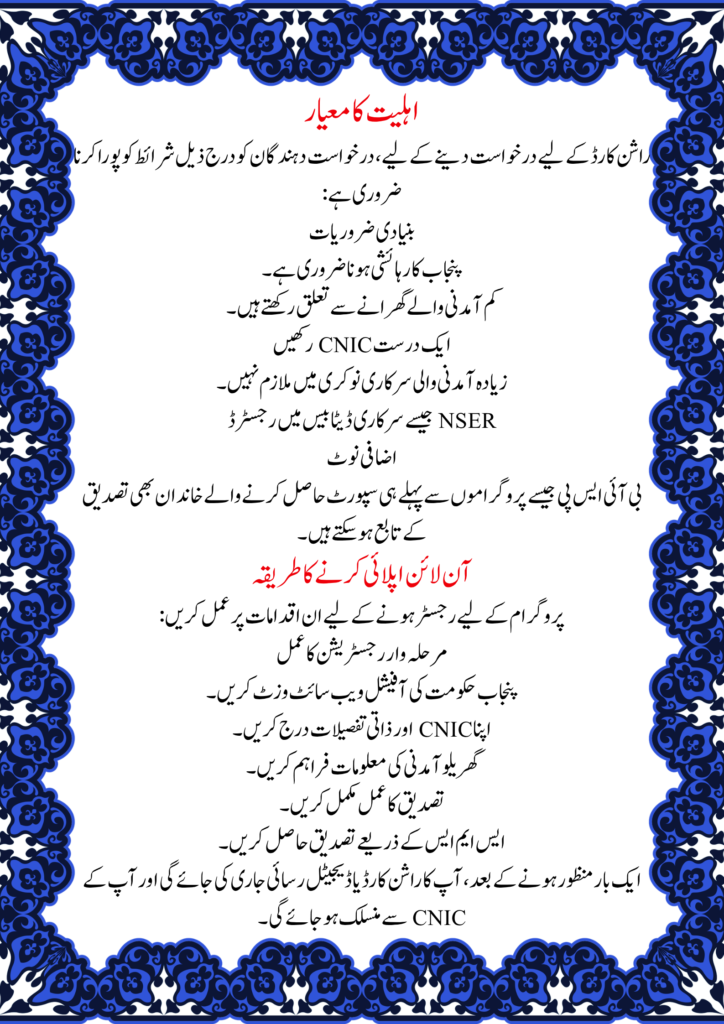
To apply for the ration card, applicants must meet the following conditions:
Basic Requirements
- Must be a resident of Punjab
- Belong to a low-income household
- Possess a valid CNIC
- Not employed in a high-income government job
- Registered in government databases such as NSER
Additional Note
Families already receiving support from programs like BISP may also qualify, subject to verification.
How to Apply Online
Follow these steps to register for the program:
Step-by-Step Registration Process
- Visit the official Punjab government website
- Enter your CNIC and personal details
- Provide household income information
- Complete the verification process
- Receive confirmation via SMS
Once approved, your ration card or digital access will be issued and linked to your CNIC.
Subsidy Distribution & Usage
The Rs. 3,000 monthly subsidy can be used through different channels:
Where You Can Use the Ration Card
- Utility stores
- Registered grocery shops
- Digital wallets or linked accounts (in selected areas)
This system makes it easier for beneficiaries to purchase essential food items without hassle.
Quick Overview Table
| Feature | Details | Benefit |
| Monthly Subsidy | Rs. 3,000 | Financial support for families |
| Eligibility Check | CNIC-based verification | Transparent system |
| Registration Mode | Online application | Easy and accessible |
| Usage | Utility & partner stores | Convenient shopping |
| Target Group | Low-income families | Support for deserving citizens |
Common Issues and Solutions
Application Rejected
Check eligibility criteria and apply again with correct details.
No SMS Confirmation
Ensure your mobile number is entered correctly.
CNIC Not Found
Update your records in government databases.
Delay in Approval
Due to high application volume, processing may take time.
Important: Always use official government platforms and avoid unauthorized agents.
Frequently Asked Questions (FAQs)
Q1: Who can apply for the ration card program?
Residents of Punjab with low income and a valid CNIC.
Q2: What is the subsidy amount?
Rs. 3,000 per month.
Q3: Is online registration mandatory?
Yes, most applications are processed online.
Q4: Where can the ration card be used?
At utility stores and registered partner shops.
Q5: Can BISP beneficiaries apply?
Yes, if they meet the eligibility criteria.
Conclusion
The CM Punjab Ration Card Program 2026 is an important step toward supporting low-income families. With a simple registration process and monthly financial assistance, the program helps ensure that basic food items remain affordable.
By using digital systems and transparent verification, the Punjab government is making welfare distribution more efficient and accessible for those who need it most.


